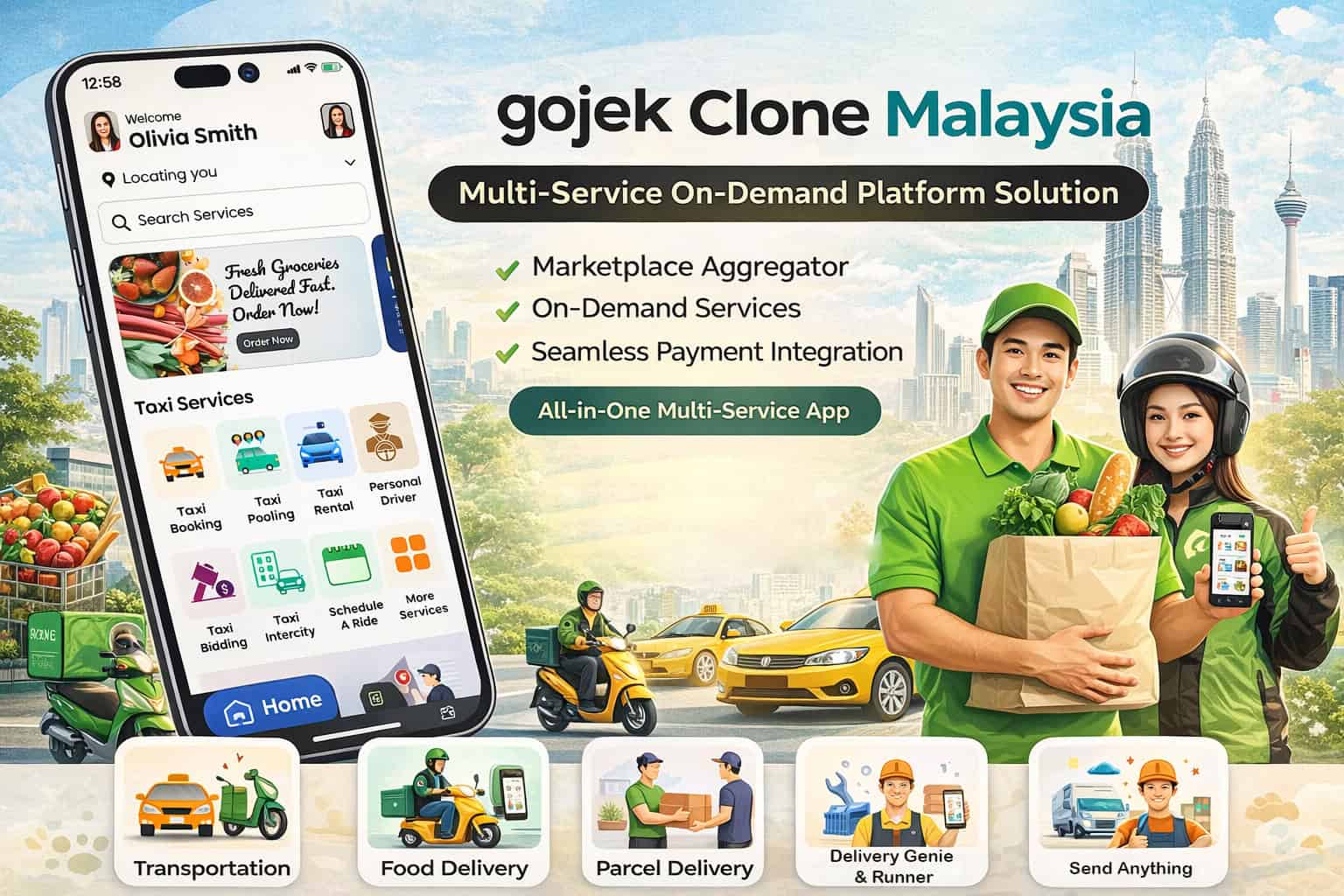
Any businessperson has two golden rules in life: to ensure that the clients are always satisfied, and to ensure that the cash flow has remained healthy. When the users are content, the reality is that profits will automatically come by. This is precisely the reason why the construction of a multi service platform such as Gojek Clone in Malaysia has been the smartest business step made in the digital age.
The economy of Malaysia is growing quickly on demand. City consumers are demanding speed, convenience and all in one roof. Already familiar with super apps, Malaysian users are driven by successful experiences of Gojek and local competitors such as Grab. This is the best condition that will allow entrepreneurs to launch a multi-service platform and achieve regular profits. You then develop too many income streams that act like a well-oiled machine, as opposed to putting all your eggs in one basket.
Here, in this blog, we will deconstruct the most important revenue models, experiment with the top features that generate high impact (and multiplied profits) and learn how you can start your own Gojek-like application in a quick and efficient way in Malaysia.
Why Malaysia Is a Profitable Market for a Gojek Clone?
Malaysia has high smartphone penetration, are highly digitized in adoptability of digital payments, and a rapidly expanding gig economy. Kuala Lumpur, Penang and Johor Bahru are highly populated and digital cities.
- The need of convenience is being heightened by busy living in the urban areas.
- Ride-hailing and food delivery is something people use every day.
- Small traders are willing to transition to the digital realm.
- Young people favor services based on apps.
- E-wallets and online payments are very popular.
The Revenue-Generating Model of a Gojek Clone Multiple Streams, One Platform
Variation is the actual power of business Gojek-style. Instead of relying on one revenue model, the platform makes money in a variety of interactions that occur on a daily basis through a variety of services.
1. Every Booking Commission
Commission-based earnings are the basis of the revenue model. Whenever a transaction occurs whether a ride, a food order or a delivery of groceries or a home service the platform receives a percentage. It implied that each time value is exchanged we get revenue.
- The taxi or bike ride commission.
- Food and grocery deliveries Commission.
- Commission on home services
- The percentage is different per category.
To illustrate, when a customer reserves a ride of 200 dollars and the platform imposes a fee of 20 per cent it will get 40 dollars immediately. The same multiplied a thousand times a day, gives you a steady revenue mill.
2. Commissions and Booking Fees
Users pay commissions as well as fees to book delivery or the service. These fees are used to assist in meeting the operational expenses and generate a consistent supplementary revenue stream.
- Food and parcel delivery fee.
- Non-variable booking cost of services.
- Distance-based pricing
- Order-size contingent fees.
As an example, a food order of $350 can have a delivery fee of $30, and that will directly add to revenue on the platform.
3. Surge Pricing
When demand is high in peak times, bad weather or during festivals dynamic pricing will come in effect. The fares dynamically increase to stabilize demand and supply.
- The peak hours will attract higher prices.
- Used to rides and deliveries.
- Stimulates more availability of partners.
- Grows income without a rise in expenditure.
Suppose a ride that was originally priced at 150 is increased to 220 during the rush hour, That distinction raises the earnings of the platform directly.
4. Merchant Commissions
Restaurants, grocery stores and service vendors pay a commission on each order placed with the on demand platform.
- Per-order commission
- Performance-based charges
- Category-based percentage
In one example, a restaurant can have to pay 18 percent commission on all confirmed orders.
5. Merchant Subscription Plans
Merchants have the option of premium plans in addition to commissions
- Subscriptions such as monthly or annually
- Improved search appearance
- Analytics dashboards access
- Promotional advantages
When a restaurant is subscribing to a premium plan, they receive the best positioning, which attracts more orders and long term loyalty.
6. In-App Advertising
The merchants will be able to place banners and sponsored promotions within the app.
- Home screen banners
- Category-based advertisements
- Specialized marketing campaigns.
A grocery store that pays to promote in-app will raise the visibility and amount of orders and advertising money to the site.
7. Featured Listings
Separate features Featured listings enable businesses to be ranked on the highest place in the search results.
- Paid top placement
- Prominent company descriptions.
- Boosted discoverability
Your platform gets more when there is competition among merchants in terms of visibility.
Fashionable Features of Your Gojek Clone that Multiplies Your Profit
Revenue does not increase by itself. It increases as the users continue returning. The sophisticated functions guarantee the seamless operation, enhanced experience and increased retention.
1. Referral & Reward Programs:
A reward system is built into the company to become brand ambassadors. Upon inviting friends and receiving credits:
Organic growth increases
Marketing costs decrease
Loyalty improves
It is marketing by word of mouth automatically.
2. Taxi Booking via WhatsApp:
A significant number of WhatsApp users dislike app downloading and like communicating through messages. By incorporating the option of booking through WhatsApp, the process is made easy.
- It feels natural.
- It feels personal.
- And it enhances reservation rate easily.
3. In-App Communication:
This enhanced secure chat between users and service providers enhances clarity without sharing personal numbers. This minimizes cancellations and misunderstandings resulting in improved reviews.
4. Verified Service Providers:
Identity verification develops trust. Users will make more confident bookings when they are safe. Trust is not burdensome it is cash.
5. Live Tracking:
Ride and delivery tracking enhances the level of transparency. Users experience control leading to more satisfaction and retention.
6. Dynamic Pricing based on AI:
The usage is influenced by weather, demand, and festivals. Intelligence allows AI to keep prices in check without interventions to avert losses and losses in a profitable way.
7. Smart Fare Calculation:
Traffic, time and demand are computed on real time. Open pricing will minimize conflict and raise acceptance rates by the providers.
8. Push Notifications:
Notifications are a way back. You keep your app in the day-to-day lives of your customers through order updates, special offers and re-engagement alerts.
Develop Your Multi-Service App Quickly
- Research your market locally and find demand services.
- Select sizable and custom-built Gojek Clone solution.
- Test the demo as user, provider and the admin.
- Make the services unique to your city.
- Create buzz-through social media.
- Seamless launch of app in stores by White-Label firm.
- Watch ratings and feedback.
- Keep on optimizing features with usage information.
When done well, your app does not only take off and it picks up steam.
Conclusion
Developing a Gojek Clone in Malaysia is not about duplicating a model it’s about building a complete revenue ecosystem. With multiple income streams, automated innovations, advanced capabilities, and recurring subscriptions, it creates a powerful, scalable business engine tailored for the Malaysian market. then will the ep users be happy, and profits will come. Provide various services, and interaction will be multiplied. Use technology to your advantage and your platform can grow at a faster rate than you can foresee. In the digital entrepreneurship market, luck is based on the brave and the well-planned.